
Logic Models are end-to-end visual representations of programs, evaluations, or interventions.
Logic Models do not follow one set template. Organizations can customize Logic Models to meet their individual needs.
Logic Models should include the following elements- inputs/resources, activities, outputs/deliverables, outcomes (short-term), impacts (long-term), and moderators/barriers.
The images below show simple Logic Model templates.
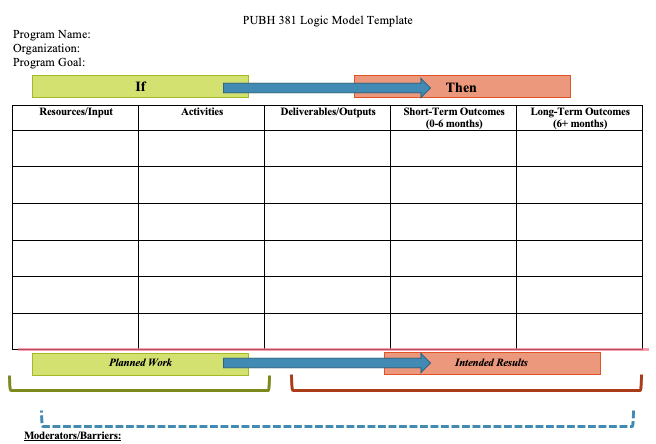
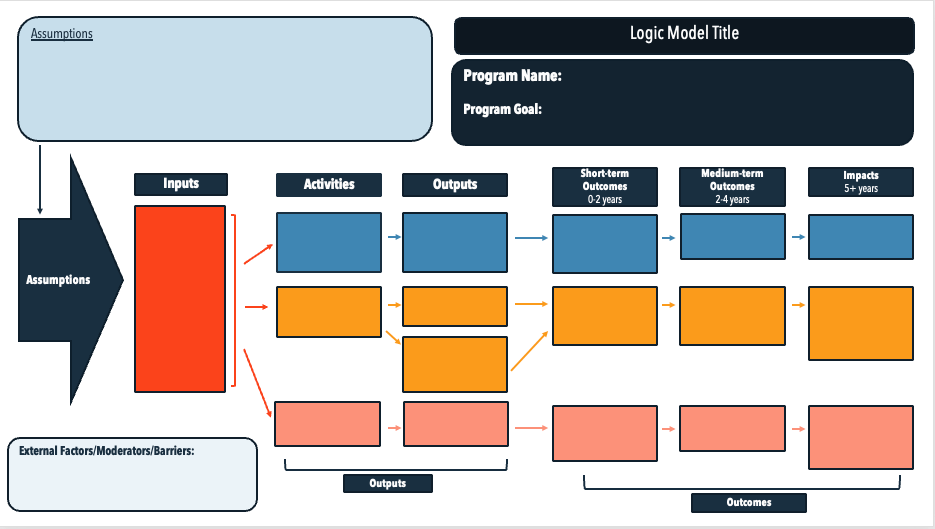
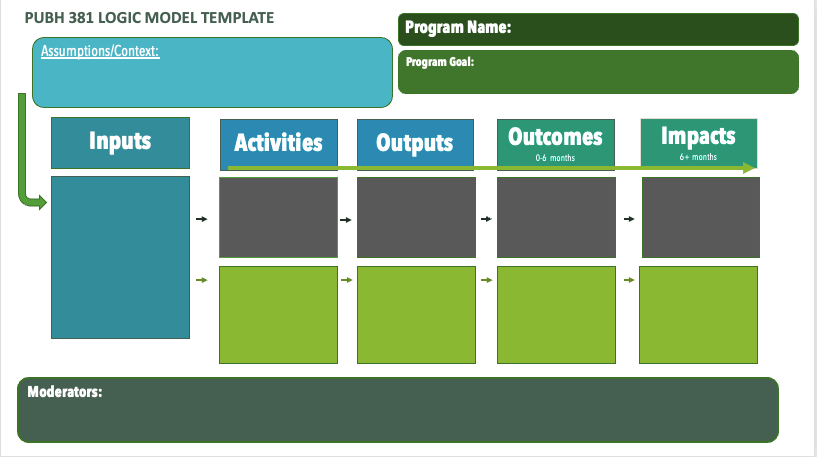
Logic Models should “flow” through from inputs to impacts. This means that the viewer should be able to see the logical progression or connection between the (Column 1) inputs/resources and the (Column 5) impacts.
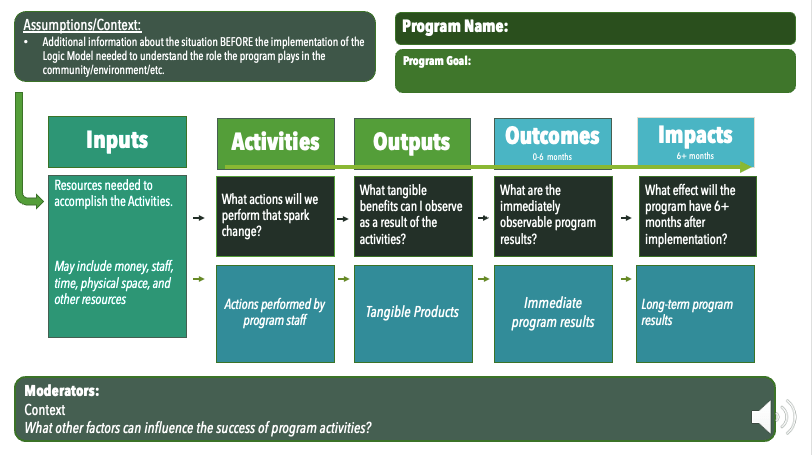
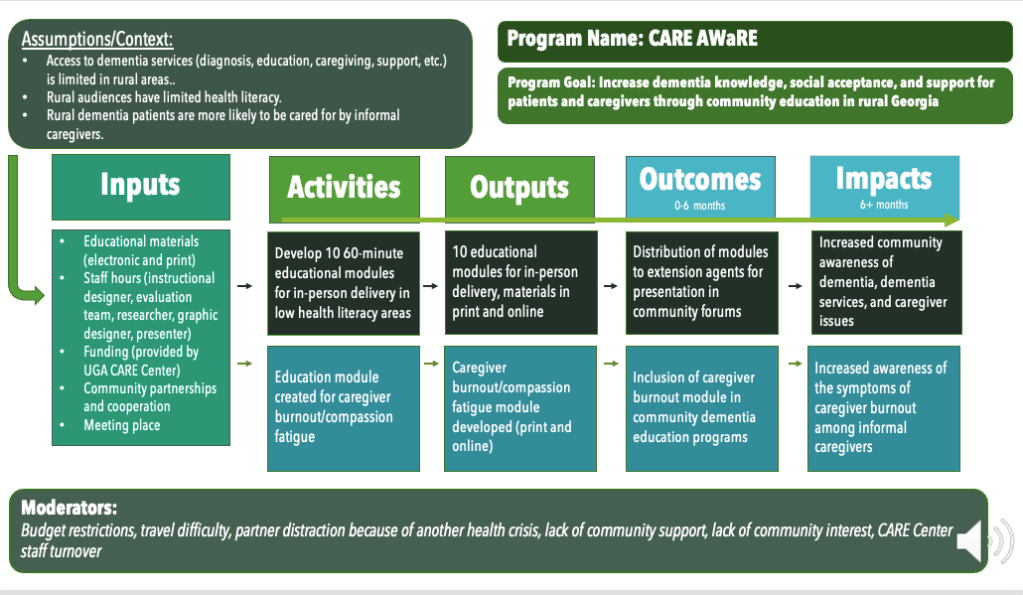
Thorough Logic Models are created with stakeholder involvement. Stakeholder involvement can take many forms, including public brainstorming sessions, emailed comments, and key informant interviews, among other methods.
Creating a Logic Model can be challenging if you do not clearly understand the development process and the required elements of the Logic Model. The video below provides additional information on those items.
Module 5 Logic Models Slide Deck
The video below describes a sample Logic Model based on UN SDG #4.
 Sister Suker's Classroom